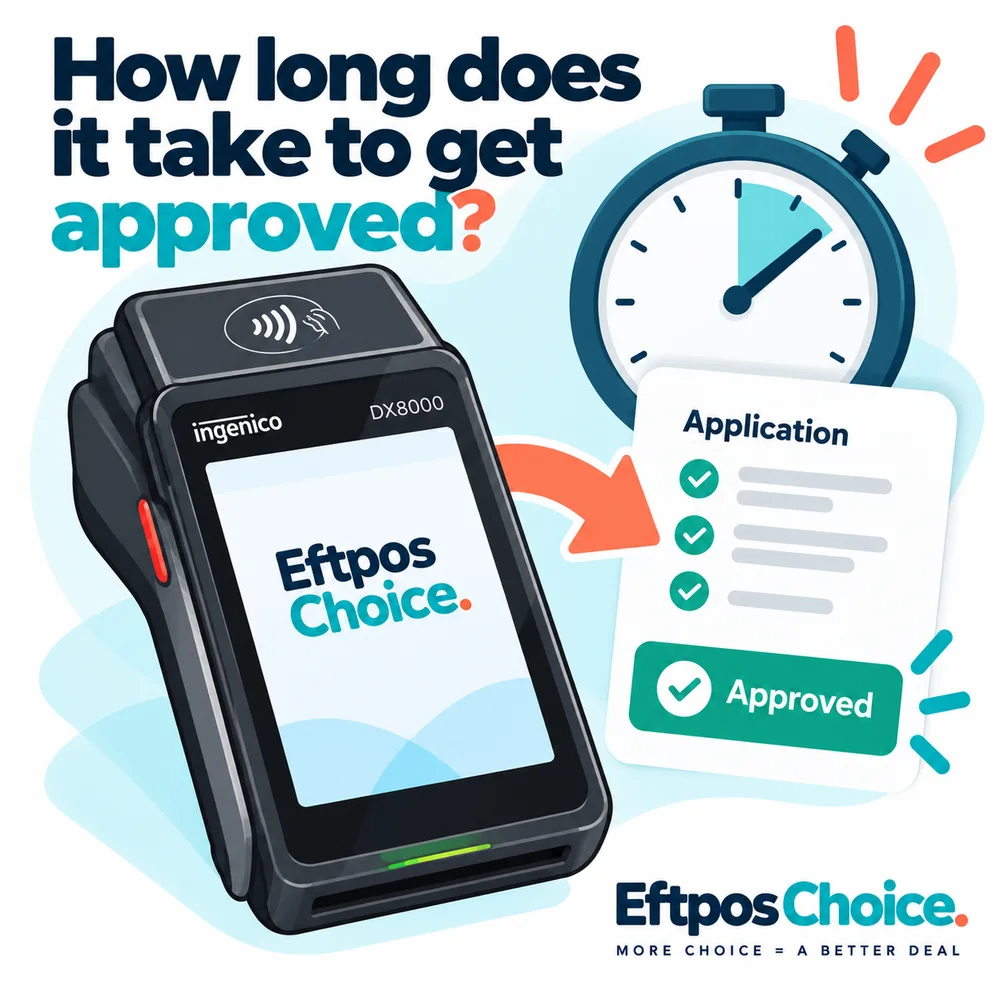
How long does it take to get approved for an EFTPOS machine?
Two to five business days is normal, same day happens. The five things that blow an EFTPOS application timeline out.
Two to five business days from a complete application to an approved facility, and then one to three more for the terminal to physically turn up. That’s the normal range in Australia. A clean, simple, low-risk business with every document attached can be done same day or next day. Three weeks means something is sitting in somebody’s inbox and nobody has picked up the phone about it.
The word doing the work in that first sentence is complete. An incomplete application doesn’t get assessed slowly — it doesn’t get assessed at all. It goes into a pending queue with a note on it, and the clock you think is running isn’t.
The four stages, and how long each really takes
Stage one: the application goes in. Minutes, if you’ve got your documents ready. This is where the delays are born, not where they show up.
Stage two: identity and compliance checks. Usually automated and usually fast — often inside the hour. ABN verified, ID verified, directors checked against the registers. Where it stops is a mismatch: the trading name doesn’t match the ABN, the ID is expired, the bank account is in a different name to the entity. Any one of those and it kicks out to a human.
Stage three: credit and risk. This is the variable one, and it’s the whole answer to the question. A café with two years of trading, face-to-face card sales and a $12,000 monthly turnover sails through on automation. A brand-new business taking deposits for work six months out goes to an analyst who will read it properly and probably ask you something. That’s a few hours versus a few days.
Stage four: terminal build and delivery. Once you’re approved, the terminal has to be configured to your merchant ID and shipped. Metro next business day is common. Regional, add a day or two. If it’s an integrated POS build rather than a standalone terminal, this is the stage that stretches, because someone has to make it talk to your point of sale — and that’s a project, not a courier job.
What blows the timeline out
A missing document. Far and away the most common. The bank statement showing the account name is the one people forget.
A name mismatch. The ABN says one thing, the bank account says another, the form says a third. Fix it before you lodge.
Taking money before you deliver. Deposits, pre-sales, memberships, event tickets, anything with a gap between payment and delivery. This goes to a human every time. It’s not a knock-back, it’s a read — but it’s a read, and reads take days.
A director with something on file. Prior insolvency, a name on a register. Doesn’t automatically stop you, but it stops the automation.
Nobody answering the phone. I’ll say it again because it’s the cause of most two-week applications. The analyst emails one question on Tuesday afternoon. If it’s Monday before anybody opens that inbox, you’ve lost four business days to a question that would have taken ninety seconds to answer.
Nominate one person. Tell them to watch for it.
Faster, and what it costs you
There’s a genuine trade-off here and it’s worth saying out loud.
The quickest onboarding in the market comes from the platform providers — sign up online, approved in an hour, terminal in the post. It’s a good product and it is properly fast. What you pay for that speed is usually a higher blended rate, slower settlement, and a facility that can be reviewed or held automatically if your volume pattern changes, because the risk they took on you at sign-up was assessed by a model rather than a person.
The slower path is a full acquiring facility with a bank. More paperwork, more questions, a couple more days, better pricing at volume, and a human you can ring when something goes wrong.
Neither is the right answer for everybody. But if you’re picking the fast one purely because you want a terminal by Thursday, know what you’re trading for it — and know that “we’ll review the pricing later” is a conversation most merchants never actually have. The pricing shapes are here if you want to see what you’d be comparing.
If you’re in a hurry, actually
Say so, on the first call, and say why. A provider can escalate an application; they just won’t do it unprompted. “I’ve got a market stall on Saturday” gets a different response to silence.
Have your documents in one folder before you start: ABN printout, ID both sides, a bank statement header in the business name, and three months of turnover if you have it. The full list is here.
Give real turnover figures. Understating them to look modest sets your processing limits low, and then your first busy week trips a limit and your settlement gets held while somebody asks what happened. That is a far worse delay than the one you were trying to avoid, and it happens after you’ve started trading.
And have a stopgap. Tap to Pay on a phone can often be live the day you’re approved, well before a physical terminal arrives. If the reason you need this fast is an event or a market, that’s usually the answer.
What to do when it stalls
Ring on day three if you haven’t heard anything. Not day ten.
Ask one specific question: what stage is it at, and is anything waiting on me? That flushes out the email nobody opened.
If the answer is “it’s with risk,” ask what they need. Nine times out of ten there’s a document or an explanation that unblocks it, and it’s yours to give.
If you’d rather not be the one chasing it — that’s what a broker is for. We do the ringing on day three.